

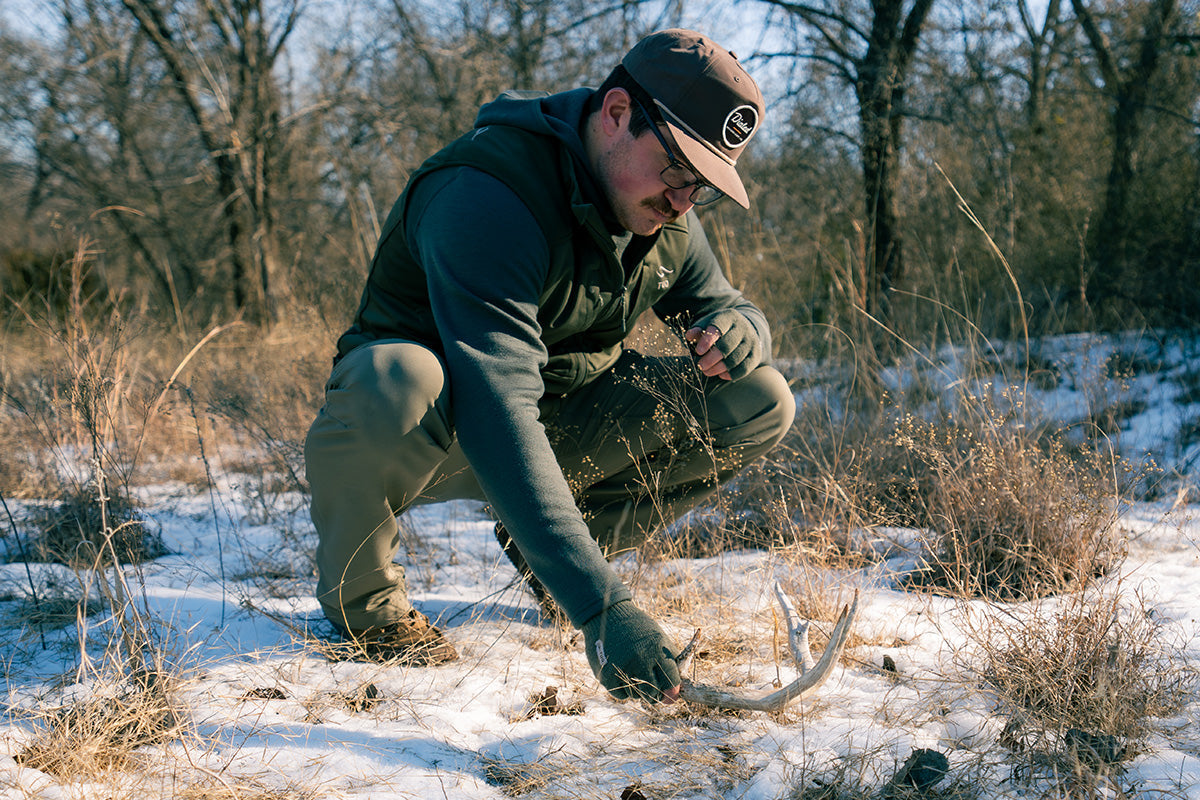
Shed hunting is one of the best parts of late winter and early spring. It gets you back in the woods, helps you learn your property, and gives you real insight into which bucks survived the season.
But there’s one problem: shed hunting can be time-consuming. You can walk miles and still miss antlers that are only a few feet away. That’s where trail cameras can completely change the game.
Using trail cameras for shed hunting allows you to identify high-traffic areas, confirm which bucks are still carrying antlers, and pinpoint the most likely shed drop zones — all while minimizing pressure on deer.
In this guide, we’ll break down how to use trail cameras to find sheds faster, where to place cameras in March, and how to build a shed hunting strategy that actually works.
Why Trail Cameras Are Perfect for Shed Hunting
Most hunters use trail cameras for fall scouting, but spring is when they become a serious advantage.
A good shed hunting trail camera setup helps you:
- Track which bucks are still holding antlers
- See when antlers start dropping in your area
- Identify the most used winter-to-spring travel routes
- Locate bedding-to-feeding patterns
- Find the best shed hunting locations before you walk them
This saves time, reduces guesswork, and increases the odds that you find sheds before other hunters, coyotes, or rodents do.
When Do Bucks Drop Antlers?
This is one of the most searched questions every spring: “When do deer shed their antlers?”
The answer depends on:
- Region and climate
- Hunting pressure
- Nutrition and stress
- Genetics and age
In most areas, shed season peaks between late February and early April. March is often the sweet spot, which makes it one of the best months to run trail cameras specifically for shed hunting.
The key is timing. You want to locate drop zones before antlers hit the ground, then move quickly once your cameras show bucks are shedding.
The Best Trail Camera Placement for Shed Hunting
If you want to find sheds faster, camera placement matters more than camera settings. Your goal is simple: locate where deer spend the most time in late winter and early spring.
Here are the highest-percentage locations.
1. Late Winter Food Sources
Food is still the top driver of movement in March. Bucks are recovering from the rut and winter stress, so they prioritize calories.
Place trail cameras near:
- Standing corn
- Cut bean fields
- Winter wheat
- Brassica food plots
- Hay and alfalfa edges (where legal to hunt/monitor)
Trail camera tip: Don’t set the camera right on the food. Set it on the trails leading in and out. That gives you better angles and fewer empty photos.
This is one of the fastest ways to identify which bucks are still in the area and whether they are still holding both antlers.
2. Bedding Area Edges and Thermal Cover
Bucks often drop antlers near bedding cover because they spend so many hours there. However, you do not want to walk directly into bedding areas in March, especially if winter conditions are still harsh.
Instead, place trail cameras on:
- Bedding edges
- Transition lines (thick cover to open timber)
- South-facing slopes
- Creek bottom thickets
These areas can reveal where bucks are staging and spending daylight hours, which often correlates with shed drop zones.
3. Fence Crossings and Obstacles
One of the best shed hunting tips is targeting obstacles.
Bucks frequently drop antlers when:
- Jumping fences
- Crossing ditches
- Climbing over downed trees
- Moving through tight brush
These spots create sudden head movement and impact, which increases the chance of an antler popping off.
If you want to find sheds faster, put trail cameras on:
- Fence gaps and crossings
- Creek crossings
- Pinch points through brush
- Terrain funnels
These locations also tend to concentrate movement, making them excellent for trail camera scouting.
4. Winter Travel Corridors
Late winter deer movement is predictable. Deer often travel the same routes from bedding to food, especially when snow or harsh weather limits their options.
Look for:
- Packed trails in snow
- Repeated tracks along field edges
- Narrow timber strips
- Ditch lines and creek edges
Place cameras where multiple trails merge. These are high-volume zones and often produce the best shed hunting results.
Cellular Advantage
Shed hunting is one of the best use cases for cellular trail cameras.
Why? Because timing matters.
Once a buck drops an antler, the clock starts. The sooner you know, the better your odds of finding it.
A cellular camera like the Black Gate R4G Gen2 4G LTE Cellular Trail Camera helps you:
- Monitor bucks daily without checking SD cards
- Confirm when a buck becomes one-sided
- Reduce disturbance in key winter areas
- Move quickly when shedding starts
Trail Camera Settings for Shed Hunting
You don’t need complicated settings for shed hunting. Keep it simple and consistent.
Recommended approach:
- Photo mode (not video) for easier monitoring
- Medium sensitivity to reduce false triggers
- Multi-shot burst (2–3 photos) to confirm antler status
- Time-lapse only if monitoring large open fields
The goal is to clearly see whether a buck has:
- Both antlers
- One antler
- No antlers
That’s the information that drives your shed hunting plan.
How to Use Trail Camera Data to Find Shed Drop Zones
Here’s the most effective strategy:
- Identify your top 2–3 winter food sources
- Place cameras on trails leading to those food sources
- Track buck inventory weekly
- Watch for bucks that suddenly go one-sided
- Focus your shed hunting search near that buck’s core area
Once you confirm a buck dropped one side, search:
- Within 100–300 yards of bedding edges
- Along the travel route between bedding and food
- Near obstacles like fences and creek crossings
This is how you turn trail camera pictures into real sheds on the ground.
Common Shed Hunting Mistakes
If you want better results, avoid these common mistakes:
- Walking too early and pressuring deer
- Ignoring bedding edges
- Only searching food sources
- Waiting too long after sheds start dropping
March is prime time. The hunters who find the most sheds are the ones who use cameras to locate drop zones early and act quickly.
Final Thoughts
Using trail cameras for shed hunting is one of the fastest ways to find antler drop zones and recover more sheds each spring. With the right camera placement, you can track buck survival, monitor shedding timelines, and focus your walking on the highest-percentage areas.
If you want to shed hunt smarter in 2026, start with a simple camera plan:
- Food sources
- Bedding edges
- Fence crossings
- Travel corridors
Then let your trail cameras do the scouting for you.

Share:
Best Trail Camera Placement in March: Spring Scouting Locations That Pay Off in Fall
Cellular Trail Cameras for Spring Scouting: Why March Is the Best Time to Go Wireless