

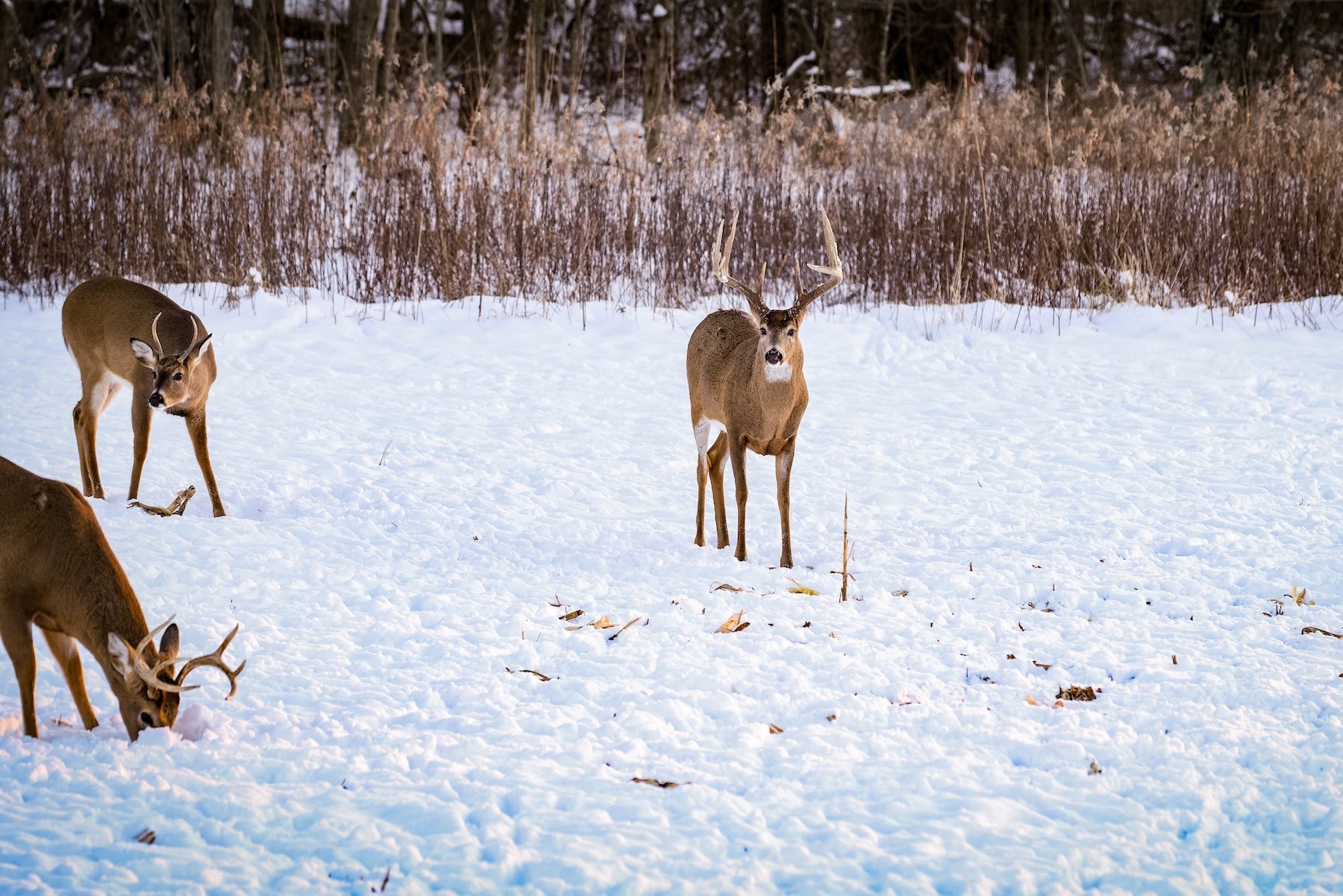
Winter is one of the most revealing seasons for understanding how deer, predators, and small game truly behave. As food sources dry up and cover shifts, wildlife is forced into new routines — and your trail camera becomes the best tool for decoding those patterns. Instead of focusing on cold-weather setups, this guide teaches you how to interpret what you’re seeing on camera so you can understand herd behavior, predict travel routes, and get ahead of early-spring scouting.
1. How Winter Changes Wildlife Behavior (And What Your Camera Will Capture)
When temperatures drop, everything in the woods becomes more structured. Animals shift from fall wandering to winter survival mode, and your trail cameras will reveal tighter patterns than at any other time of year.
A. Food Shortages Create Predictable Movement
Winter forces deer and other wildlife into high-efficiency feeding strategies. With less available nutrition, look for:
- More frequent visits to the same food source
- Shortened travel distances
- Consistent timing around dawn and late afternoon
Common winter food patterns you’ll see on camera:
- Deer returning to the same cut fields or browse lines every evening
- Coyotes cruising along field edges searching for weakened prey
- Turkeys flocking tightly around remaining mast or grain
Your trail cam data becomes a weekly logbook showing which food source has become the center of the herd’s winter routine.
B. Cover Shifts as Thermal Needs Increase
Animals need warmth and wind protection more than ever. Your cams may show:
- Deer bedding closer to food than they did in fall
- Herds moving into cedar patches, thick pine, or south-facing slopes
- Predators shadowing deer bedding zones more closely
Unlike fall, when bedding is often spread out, winter bedding becomes more concentrated. One or two prime bedding pockets can hold an entire winter group.
C. Travel Corridors Become More Linear
Snow and energy conservation force wildlife into narrow, defined routes. On camera, you may notice:
- Deer using the same trail within minutes of each other
- Coyotes following deer tracks
- Reduced side-to-side wandering — movement becomes straight and efficient
This is one of the best times to identify corridors that will matter for spring stand setups.
2. What Signs on Trail Cam Footage Reveal About Herd Behavior
Your trail-camera images are full of clues — even when there’s no deer in the frame. Winter exaggerates these signs, making behavior patterns easier to decode.
A. Tracks and Trail Depth Tell You How Often a Route Is Being Used
When reviewing photos or videos, zoom in on:
- Trails forming behind animals
- Track depth relative to fresh snowfall
- Whether trails are single-file or widened
Single-file tracks = cautious movement, often near bedding
Widened trails = heavy daily use with multiple deer
Deep, churned trails = major winter travel corridor
This is intel you rarely get in any other season.
B. Repeated Individual Appearances Indicate Social Structure
Winter brings deer into stable groups. Look for:
- The same matriarch doe leading younger deer
- Small bachelor groups sticking together
- Which bucks tolerate each other in winter feeding areas
- Subordinate deer waiting until dominant animals leave
These patterns reveal more about herd hierarchy than any fall camera setup.
C. Water Visits Reveal Stress, Scarcity, or Pressure
In harsh winter conditions, your camera may capture:
- Deer hitting thawed creek edges immediately after storms
- Predators visiting open water during sustained freezes
- Increased water visits at night (a sign of daytime pressure)
If deer are traveling long distances for water, expect stronger movement patterns during warm-ups.
D. Weather-Triggered Movement
Your camera timestamps tell you how wildlife responds to conditions. Typical winter patterns include:
- Increased movement 12–24 hours before a snowstorm
- Heavy feeding the day after extreme cold snaps
- Sharp increases in daylight activity when temperatures rise
Winter magnifies weather-driven movement. Reading these signals can help you predict travel days long before spring scouting begins.
3. Using Trail-Cam Intel to Build Your Early-Spring Scouting Strategy
Winter is the blueprint. Spring is the execution. Your trail-camera data should directly shape how you scout and set up the first part of the new season.
A. Pinpoint Core Winter Bedding → Predict Core Spring Bedding
Not all bedding shifts dramatically with the season. South-facing ridges, pine thickets, and protected bowls often continue to hold deer as temperatures warm. If your cameras confirmed winter bedding pockets, flag them for early-spring inspection.
B. Identify Winter Travel Corridors That Remain Relevant
Some winter trails fade as vegetation grows — but the major terrain-driven ones remain active year-round. These include:
- Saddles
- Ridge-to-ridge crossings
- Creek-bottom funnels
- Interior timber edges
Winter reveals these corridors more clearly than any offseason walk-through.
C. Map Feeding Pressure to Predict Spring Green-Up Movement
Where deer spend the winter tells you:
- Which fields or browse lines will be early attractants
- Where deer will shift when new growth starts
- Which groups will break apart and where they’ll disperse
A close cluster of winter feeding activity often becomes a spring hotspot.
D. Position Spring Cameras Based on Winter Behavior — Not Guesswork
Your winter data should guide your spring placements:
- Place cameras on staging areas deer used before hitting winter food
- Reposition along funnels that deer used during storms
- Set early-season cams near water sources that had repeated winter visits
Winter patterns shorten your spring learning curve dramatically.
Final Thoughts
Interpreting winter game patterns is one of the most underrated ways to gain a strategic edge. Trail cameras help you understand not just where animals move — but why they choose certain routes, how weather changes their behavior, and how social structures shift under winter pressure.
When you learn to read these patterns, the woods become predictable. And predictable movement is the foundation of better scouting, better setups, and better success when the next hunting season arrives.

Share:
Hunting Trends & Forecast for 2026: What’s Changing in Gear, Tech & Ethics
Cellular Trail Camera Benefits: Why Go Wireless in 2026?